Skip to content

A burst pipe, roof leak or appliance failure can turn a normal room into a complex building problem within hours. Water damage restoration Longview WA work should begin with safety, source control and documentation before damaged finishes are removed. Fast action matters, but rushed demolition without a plan can make insurance, drying and reconstruction harder.
Central Point Homes provides professional restoration services for water, storm and structural damage. This eight-step roadmap explains how a home typically moves from an active loss to a dry, repaired and more resilient condition.

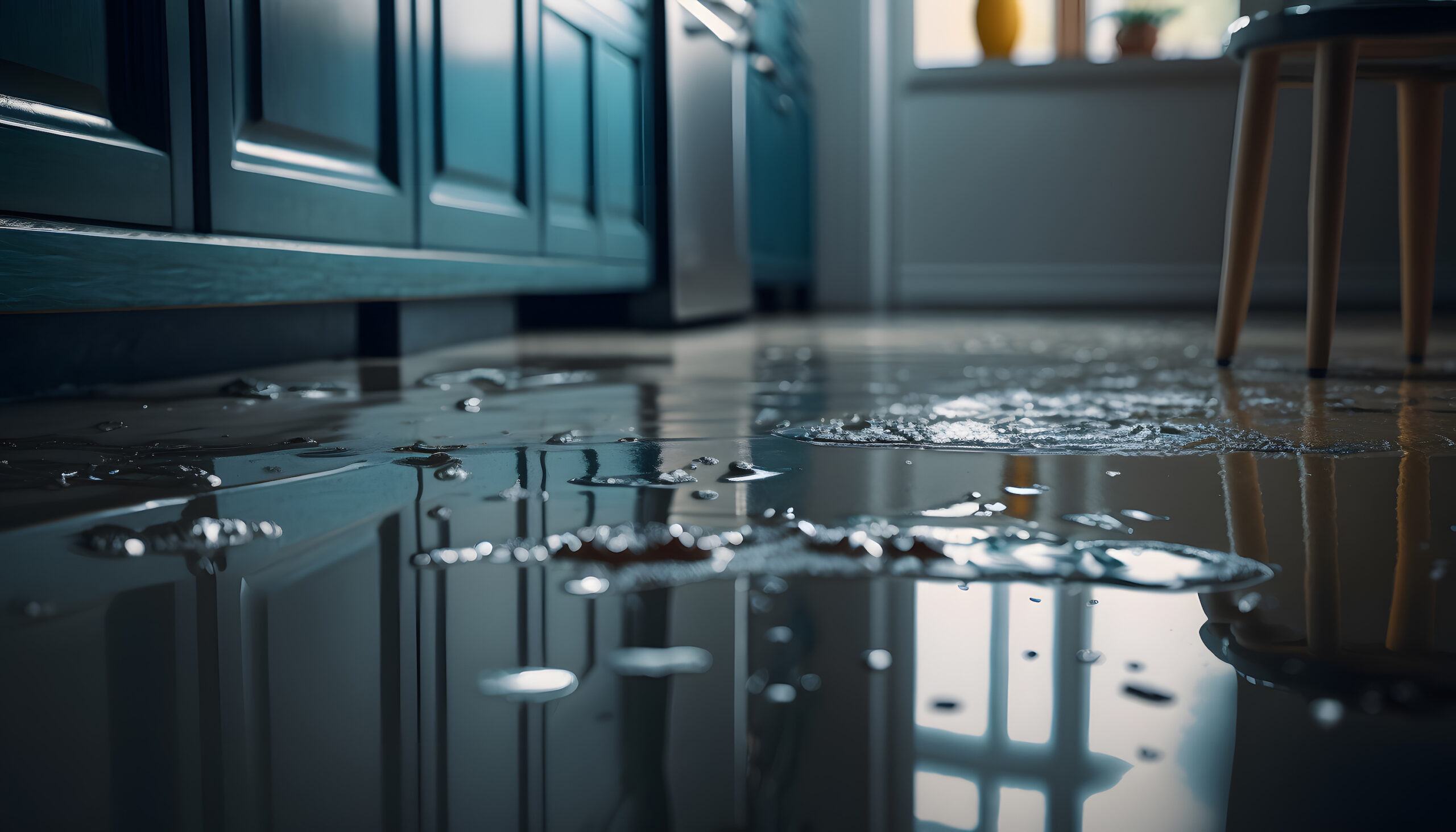
Featured image – Water damage restoration Longview WA assessment after interior flooding. Image source: Central Point Homes
1. Make the Area Safe and Stop the Source
Do not enter areas with electrical hazards, contaminated water, unstable ceilings or structural damage. Shut off water only when it is safe and contact emergency services or utilities when needed. A plumbing repair may stop the flow, but it does not complete the restoration. Document the source and the time it was controlled. If the loss involves sewage, floodwater or chemicals, the cleanup approach and personal protection requirements are different from a clean-water leak.
2. Notify the Insurer and Document Conditions
Photograph and video affected rooms before moving items when safety permits. Record damaged materials, contents and the apparent source. Contact the insurer promptly and ask about emergency mitigation, preferred documentation and approval procedures. Keep receipts and a log of calls, site visits and decisions. The contractor should provide a clear scope and distinguish urgent stabilization from permanent reconstruction. Good records reduce confusion when multiple companies or adjusters become involved.
3. Inspect Beyond the Visible Stain
Water travels through flooring, wall cavities, insulation and framing. The visible puddle may represent only part of the affected area. Moisture meters, thermal imaging and selective openings can help define the extent of wet materials. Inspect lower floors, crawlspaces and adjacent rooms. A water damage restoration Longview WA assessment should look for structural movement, wet electrical components and trapped moisture, not simply surface discoloration.
4. Remove Water and Begin Controlled Drying
Standing water is extracted, then airflow, dehumidification and temperature are managed to dry the structure. Equipment placement should follow measured conditions rather than a fixed number of fans. Materials respond differently: solid wood, engineered flooring, drywall, insulation and cabinets each have limits and drying characteristics. Daily or periodic readings document progress. Drying equipment should remain in place until objective targets are met, not only until the room feels dry.

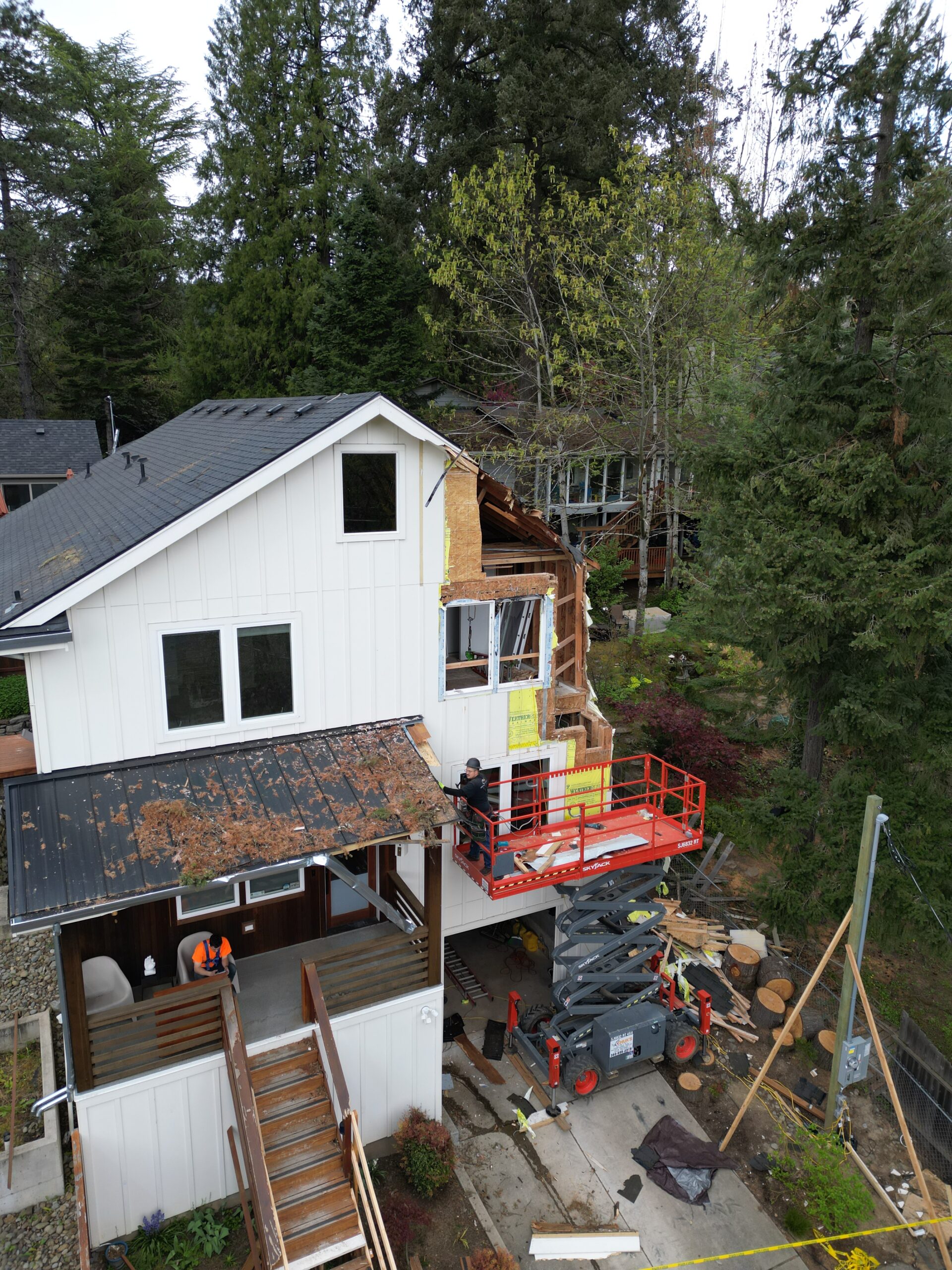
Restoration crew rebuilding damaged exterior and structural areas. Image source: Central Point Homes
5. Decide What Can Be Cleaned, Dried or Removed
Some materials can be saved when the water source is clean and drying begins quickly. Others lose strength, trap contamination or cannot be cleaned effectively. Porous finishes exposed to contaminated water often require removal. Cabinets and flooring may be partially salvageable depending on construction and moisture exposure. The decision should consider health, performance, appearance and the ability to verify drying behind the material. Saving an item that hides moisture is not a true cost savings.
6. Address Mold and Indoor Air Concerns
Mold can grow when materials stay damp, but a dark stain alone does not define the entire problem. The priority is removing moisture and contaminated materials using appropriate containment and cleaning methods. Large or complex areas may require specialized remediation. Avoid simply painting over growth or applying fragrance to mask odors. The repaired assembly should be dry, clean and designed to avoid repeating the moisture condition. Occupants with health concerns should seek medical guidance.
7. Rebuild From Structure and Systems Outward
Reconstruction begins after the damaged area is stable and dry. Framing, subfloor, insulation, electrical, plumbing and mechanical components are repaired before drywall, cabinets, flooring and paint. Permits and inspections may be required depending on the scope. Central Point Homes coordinates restoration with home remodeling in Longview when the repair also creates an opportunity to improve layout or materials. Upgrades should be clearly separated from like-for-like insurance work.
8. Correct the Cause and Reduce Future Risk
A restored room is incomplete if the original weakness remains. Improve flashing, drainage, plumbing access, shutoffs, appliance pans or leak detection as appropriate. Review roof and gutter conditions, grading and ventilation when they contributed to the loss. Store photographs of concealed repairs and note shutoff locations. A modest prevention investment may reduce the chance that the same event damages the new finishes.
How to Evaluate a Restoration Scope
The proposal should identify affected areas, demolition limits, drying responsibility, testing or documentation, reconstruction materials, permits and exclusions. Ask how concealed damage will be handled and who coordinates with the insurer. Avoid a scope that jumps directly to cosmetic replacement without confirming dry conditions and structural integrity. A trustworthy contractor explains what is known, what requires investigation and how changes will be approved.
Restoration Is Also a Building-Science Project
Water damage connects structure, enclosure, mechanical systems and indoor air. A leak at one location may reveal poor drainage, air leakage or a vulnerable material transition. Treating the home as a system helps the team repair the immediate damage and identify practical resilience improvements. The objective is not only to make the room look the way it did before, but to return it to safe, durable service.
Questions to Ask Before Approving the Scope
Ask who is responsible for design, engineering, permit coordination, field supervision, schedule updates and change documentation. Request a written description of exclusions and allowances, not only a total price. Confirm how existing conditions will be investigated and how concealed discoveries will be priced. For a water damage restoration Longview WA project, the strongest proposal explains both the finished result and the work required behind it. Homeowners should understand which decisions are final, which remain allowances and what information could still change the budget or schedule. Also ask how the team protects occupied portions of the home, controls dust and noise, secures the site and communicates decisions that affect cost or completion dates.
What a Complete Contractor Proposal Should Include
A useful proposal for water damage restoration Longview WA should be detailed enough to compare scope rather than price alone. Look for a description of demolition, structural work, building-envelope details, plumbing, electrical, mechanical systems, insulation, finishes, cleanup and closeout. The proposal should identify owner selections, allowances, exclusions, permit fees and assumptions about existing conditions. It should also explain payment milestones, change-order procedures, warranties and the documentation provided at completion. A low number can become expensive when important work is omitted or assigned to an unclear allowance. Compare whether each bidder has included the same level of design, supervision and trade coordination. When proposals differ, ask for written clarification before signing so the contract reflects the project you actually expect to build.
Why Preconstruction Is Part of the Project
Preconstruction is where a water damage restoration Longview WA concept becomes a buildable plan. Site measurements, existing-condition investigation, code research, engineering, product decisions and permit requirements reveal constraints before crews are mobilized. This phase also allows the contractor to sequence long-lead materials, coordinate specialty trades and establish realistic access and protection plans. Rushing directly into construction can shift unresolved questions into the field, where changes are more disruptive and costly. A well-managed preconstruction process does not eliminate every surprise, particularly in an existing building, but it reduces avoidable uncertainty. Homeowners should expect clear milestones for design approval, selections, pricing updates, permit submission and construction readiness. The result is a scope that is easier to understand, schedule and execute.
Project Planning Checklist
- Confirm the area is safe before entry.
- Stop the water source when safe.
- Photograph conditions and contact the insurer.
- Inspect adjacent and concealed assemblies.
- Track drying with objective moisture readings.
- Separate salvageable from unsalvageable materials.
- Complete structural and trade repairs before finishes.
- Correct the cause and document prevention improvements.
Frequently Asked Questions
How quickly should drying begin?
As soon as the area is safe and the source is controlled. Delays increase the chance of material damage and microbial growth.
Can drywall be dried instead of removed?
Sometimes, depending on water category, exposure time, damage and whether the wall cavity can be verified. A property-specific assessment is needed.
Should I use household fans?
Only when it is safe and contamination is not a concern. Professional drying uses controlled airflow and dehumidification with monitoring.
Does insurance pay for upgrades?
Policies often address covered damage on a like-for-like basis. Homeowner-selected upgrades may be separate; confirm with the insurer.
Are permits required for restoration?
They may be required when structural, plumbing, mechanical, electrical or significant building work is involved. Check the approved scope with Longview.
Plan the Project With Central Point Homes
A careful water damage restoration Longview WA process proves the home is dry and sound before new finishes hide the work. Contact Central Point Homes to discuss reconstruction and durable repairs.
External Sources
- U.S. EPA – Mold Cleanup in Your Home
- FEMA – Flood Cleanup to Protect Indoor Air Quality
- City of Longview – Building Division
Image Credits
- Water damage restoration Longview WA assessment after interior flooding – Central Point Homes website
- Restoration crew rebuilding damaged exterior and structural areas – Central Point Homes website